

ONE SONG. ONE RELEASE. ONE VERY DELIBERATE PROTEST.
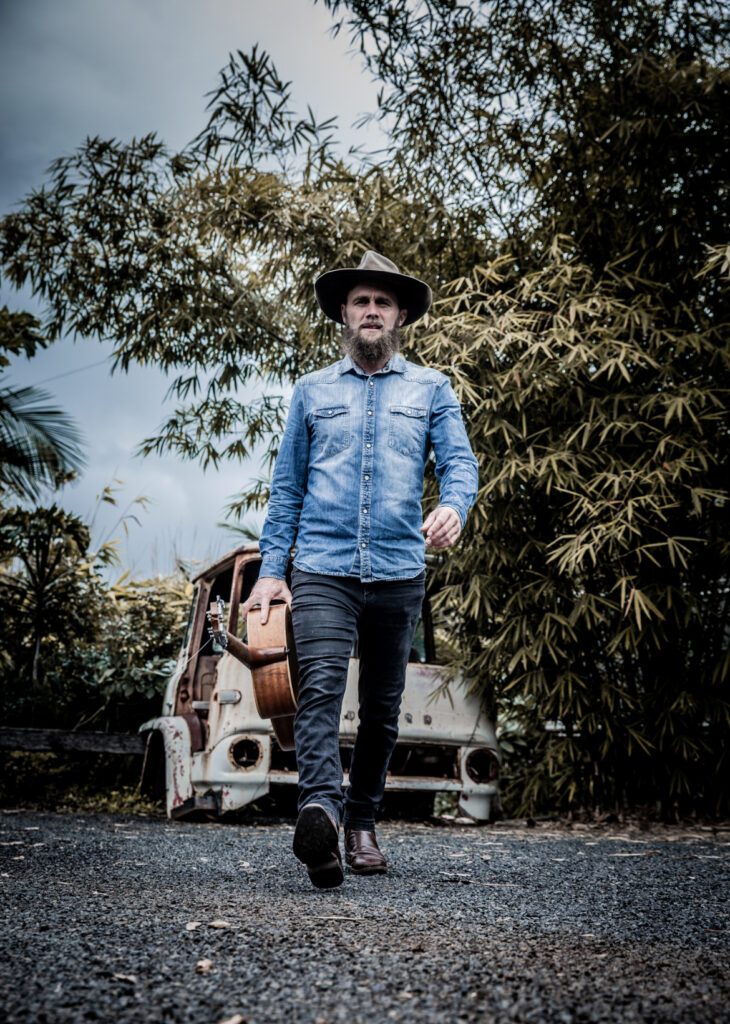
Tomorrow, at exactly 11.11am on 11th August, Australian award winning songwriter Dan Hannaford will do something he has deliberately avoided for years.
He will release a song, sending it out across the major streaming platforms, including Spotify. One song, one time, one very deliberate protest against Spotify, AI and an industry that has forgotten the artist.
Pay Day was written by Hannaford in 2014 after playing a gig and discovering that, despite doing the work, the money he was owed wasn’t coming.
Twelve years later, the song is being released on Spotify. Not because Hannaford has suddenly embraced the platform, but because he wants to put an old protest into the middle of a very modern conversation. And the timing is deliberate.
11.11. Pay Day.
“I wrote Pay Day because I’d played a gig, done the work and then wasn’t paid. Twelve years later, not much has changed. The arguments are just bigger now; who owns the music, who profits from it and what the person who actually created it is worth,” said Hannaford.
The release comes at a time when artists are confronting an industry increasingly shaped by streaming platforms, algorithms and artificial intelligence; technologies that can make music more accessible while simultaneously raising difficult questions about who gets paid, who gets heard and what happens to the value of the person who actually created the work.
For Hannaford, Pay Day is the perfect song to enter that conversation.
The songwriter has spent almost two decades building an entirely independent career. He has sold more than 30,000 CDs, toured extensively, recorded and performed internationally and held a Sony development deal. He has built a living from music without relying on streaming platforms to build his audience.
“I’m not joining Spotify. I’m using it to say something about what happens when we stop valuing the people who make the music.”
And for Hannaford, the conversation now extends well beyond streaming. Artificial intelligence is rapidly changing the creative landscape, while artists are increasingly questioning how their work is being used to train AI systems; without their knowledge, permission or compensation.
“AI doesn’t wake up one morning and know how to write a song. It has been trained on the work of people who spent their lives learning how to do it. That work has value, and the artists who created it deserve compensation and a say in what happens to it.”
Hannaford isn’t opposed to technology. He’s questioning what happens when technology advances faster than the value placed on the people whose creativity made that advancement possible.
“I’m anti the idea that you can take an artist’s life’s work, use it to teach a machine how to replicate what they do, and leave the artist completely out of the conversation.”
That, he says, is why a song written about a missing pay cheque in 2014 still feels relevant in 2026.
“Back then, I was extremely annoyed because I’d done the work and hadn’t been paid. That’s still happening. The difference is that now we’re having much bigger conversations about what an artist’s work is actually worth.”
And the irony of where Pay Day is landing isn’t lost on him.
“I’ve never used Spotify, and that’s not an accident. I’ve watched the industry slowly teach people that music should be cheap, instant and everywhere, while the people making it are expected to somehow survive on exposure, fractions of cents and a hope that the algorithm notices them.”
So Hannaford is not uploading his catalogue, he’s not chasing playlists, he’s not trying to become a streaming artist. He’s putting one song on streaming platforms. A song about getting paid. A song that went on to win the National Songwriting Competition’s Protest category. And a song that, twelve years after it was written, has found an entirely new protest to make.
“I don’t want to preach to people who already agree with me. I want the song sitting right there, in the middle of the conversation.”
At 11.11am on Tuesday 11 August 2026, Pay Day will be released across streaming platforms, including Spotify.
Then Hannaford will leave the song to do what his songs have always done best. Start a conversation.
Pre-save song: https://distrokid.com/hyperfollow/danhannaford/pay-day